Fort Worth Second Chance Team is a licensed apartment locating service covering all of Fort Worth and Tarrant County, specializing in placing renters who need a third-party lease guarantee to clear screening. Our service is free to renters - communities pay a referral fee at lease signing.
Finding apartments that accept a guarantor in Fort Worth can feel like a full-time job, and it is one of the most common reasons a renter contacts us. This guide breaks down how to secure that approval and what it costs.
How a Lease Guarantee Works
A lease guarantee is a simple agreement where a third party agrees to cover the rent if a tenant defaults. This powerful tool lets a property manager approve an applicant they would normally decline due to strict credit or income rules.
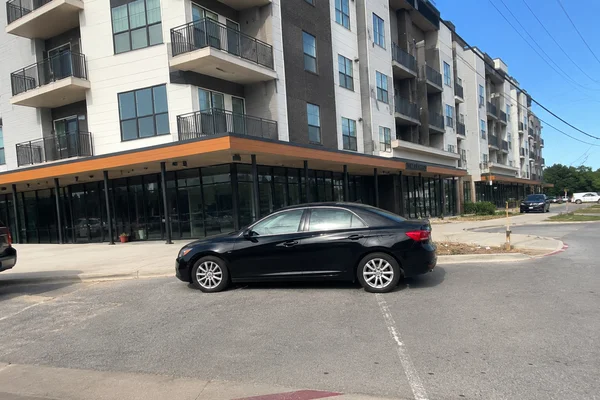
Our process relies heavily on this mechanism for second-chance leasing. Class A and luxury apartment buildings in Fort Worth - from new lease-ups along the Alliance corridor in North Fort Worth to established mid-rises near I-30 - are largely owned by institutional operators like Greystar, Willow Bridge, and RPM Living.
Institutional properties run on strict corporate criteria, meaning the on-site team has zero authority to make exceptions for your application.
Those same operators accept guarantee programs as a matter of standard policy. So the building that refuses to bend its credit threshold by twenty points will gladly approve a guaranteed applicant.
We work directly with top-tier providers like TheGuarantors, OneApp Guarantee, Liberty Rent, and CoSign. You also have options for deposit alternatives through Jetty, LeaseLock, Obligo, and Qira.
Here are the key details on how these programs work:
- Approval is separate: They carry their own qualification standards, meaning you must apply directly with the guarantor company.
- Fees are standard: Programs are typically priced as a one-time fee, which usually equals about one month of rent.
- The property decides: The apartment community still makes the final call on your approval.
Lease Guarantee vs. Deposit Alternative
These two concepts get confused constantly, and mixing them up will end up costing you money.
A lease guarantee focuses entirely on getting your application approved. Someone else stands behind the rent so the property risk calculation changes, and a file that failed screening can finally pass.
A lease guarantee is the exact tool that opens up inventory for business owners relocating staff or families needing a fresh start.
A deposit alternative is strictly about keeping cash in your pocket at signing. Instead of handing over a doubled security deposit, you pay a much smaller premium and the provider covers the property.
Our team built a simple comparison to show the difference based on typical 2026 US apartment market costs:
| Feature | Lease Guarantee | Deposit Alternative |
|---|---|---|
| Primary Purpose | Overcomes strict credit or income barriers. | Lowers your upfront cash required at signing. |
| Average Cost | Typically a one-time fee equal to one month of rent. | Usually a low monthly fee around $15 to $20, or a small upfront premium. |
| Impact on Approval | Can turn a denied application into an approval. | Rarely changes the initial approval decision. |
| Best For | Applicants who fall short of the 40x income rule. | Approved renters facing a massive $1,500 to $2,000 double deposit. |
If the property said no, you absolutely need a guarantee. If the answer was yes but they requested a double deposit, a deposit alternative is your best bet. Occasionally, a renter will actually need to use both.
When a Personal Co-Signer Is the Better Option
A family member or business partner offering to co-sign is always worth considering. Just keep in mind that a personal co-signer is not equivalent to an institutional program.
A personal co-signer must qualify based on their own credit score and income, and they take on total personal liability for the full lease. Property managers require co-signers to meet a much higher income multiple than a primary applicant.
In the US rental market, landlords typically require a tenant to earn 40 times the monthly rent. For a co-signer, that requirement jumps to a staggering 80 times the monthly rent.
For a $3,000 apartment, your co-signer needs to prove a gross annual income of at least $240,000.
Many corporate-managed communities across Fort Worth and Tarrant County - including properties in Arlington and Mansfield - completely refuse personal co-signers. Underwriting an individual takes significant administrative work that these properties would much rather outsource to a third-party company.
Fort Worth Second Chance Team’s standard practice is to verify exactly what the target property permits before anyone starts asking relatives for massive financial favors. Where a personal co-signer is accepted and available, it is almost always cheaper than buying a guarantee policy.
Where it is prohibited, a professional program is the only clear path forward.
What Happens Before You Pay a Premium
These professional guarantee programs will screen your application independently. Being told a property accepts TheGuarantors is completely different from actually getting approved by TheGuarantors.
Building your apartment search around a program you do not qualify for wastes your strict moving deadline as well as your money.
Fort Worth Second Chance Team follows a strict sequence to ensure you never pay an unnecessary fee:
- Identify the exact gap: First, we determine if your barrier is income, credit history, or a lack of rental background.
- Confirm property acceptance: The next step involves verifying which specific programs the target communities accept.
- Secure program approval: We then help you get fully qualified with the guarantor company before you apply for the apartment.
- Price the total cost: Your final step requires calculating the premium against the actual rent and any active market discounts.
According to 2026 data from Zillow, nearly 40% of US rental listings offer some type of concession to attract renters. Fort Worth is in the middle of this wave, with developments like the 1,785-unit Westside Village adding inventory and pushing concessions across the market.
At a brand new lease-up offering six weeks of free rent, that concession can easily absorb most of your one-month guarantee premium.
At an older, stabilized property, you will not see those same deep discounts, and you need to know that math before you take a tour.
If your budget is the main constraint, we look at alternative solutions to reach the same result for less money. This can mean targeting a community that only requires double income, adding a co-applicant, or utilizing a cheaper deposit alternative.
The lease guarantee is a highly effective tool, but it should never be your default starting point.
Ready to Start Your Apartment Search?
Getting approved for a lease does not have to be a frustrating process.
You now have a clear understanding of how to use a guarantor to your advantage.
Our team is ready to review your specific situation and find the best path forward anywhere in Fort Worth and Tarrant County. Whichever route fits, our second chance apartment locating in Fort Worth confirms which communities accept it before you pay an application fee. Reach out today to discuss your options.