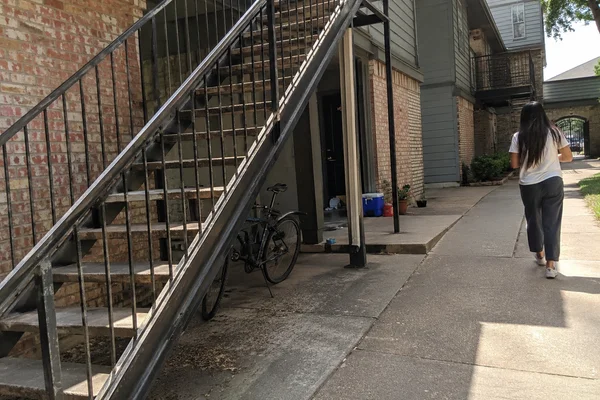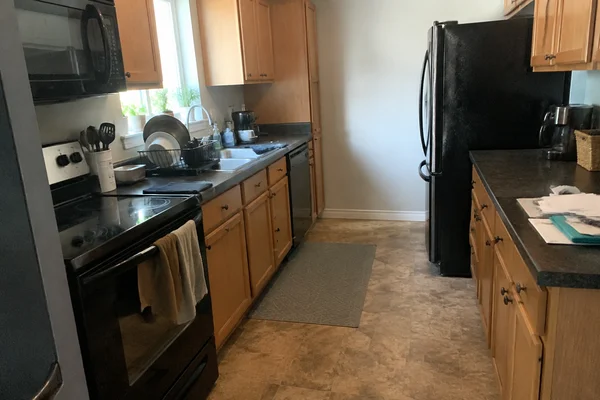
Fort Worth Second Chance Team helps renters with bad credit find apartments across Fort Worth and Tarrant County at no cost. We are a veteran-operated, TREC-licensed locating service, and we start every search by finding out what properties actually screen on rather than what you assume they check.
Income and rental history carry more weight than a credit score at most Fort Worth properties. A large share of communities, from Alliance lease-ups in North Fort Worth to established properties in Meadowbrook and Near Southside, look at factors beyond a standard FICO score, including:
- Proprietary rental screening scores (like SafeRent or TransUnion SmartMove).
- In-house models built into RealPage or Yardi.
- Verified business or personal income.
This detail matters in a practical way. A renter with a 590 FICO, two years of on-time rent, and documented income can outscore an applicant with a 660 FICO who carries a past rental collection. Here is how to position your application for approval.
Your Credit Score Carries Less Weight Than You Think
We constantly see scores in the 580 to 620 band solved with a deposit alternative or a lease guarantee rather than forcing you to drop to a lower tier of inventory. A 2026 TransUnion SmartMove report shows that nearly 85% of landlords cite payment problems as their top concern, not just an arbitrary credit number. Showing proof of steady income overrides a low credit score at most properties managed by companies like Greystar, Willow Bridge, and RPM Living across Fort Worth.
Our team identifies the specific properties where you already clear the necessary thresholds. A deposit alternative through Jetty, Obligo, or LeaseLock is the faster route to conditional approval in many cases. We price that alternative against a doubled cash deposit so you can pick the cheapest path, saving hundreds or thousands at signing.
Approved, conditionally approved, and declined
These three outcomes need different responses and renters often confuse them. We break down exactly what each status means and how to handle it.
| Outcome | What It Means | How We Solve It |
|---|---|---|
| Approved | Your file cleared completely. You will receive a standard deposit requirement and standard terms. | We review the lease to ensure the terms match your initial expectations before you sign. |
| Conditionally Approved | The property wants you but requires extra protection, like a doubled deposit, a monthly risk fee, or a shorter initial term. | This is simply a cost problem. We use deposit alternatives like Rhino or LeaseLock, which typically cost just $15 to $30 a month instead of a massive cash deposit. |
| Declined | The file did not clear the threshold, and throwing a bigger cash deposit at the property will not fix it. | We immediately pivot to a lease guarantee, a co-applicant, or a property with a lower threshold to stop you from wasting money. |
Bringing more cash to a property that already said no is the most common wasted move we see. A better strategy involves finding a community that accepts your specific financial profile.
How To Use Your Adverse Action Notice
We tell every applicant that an adverse action notice is the most useful document in this entire process. If a property declines you based on a consumer report, federal law entitles you to this notice. Most renters simply throw it away.
This document provides highly specific details about your denial, such as:
- The exact consumer reporting agency the property used.
- Whether the decision came from credit, rental history, income, or a criminal record.
- Instructions on how to view your specific file.
Our team uses this document to exercise your rights under the Fair Credit Reporting Act (FCRA). You have exactly 60 days from the date of the notice to request a free copy of your report from that specific bureau. Getting that report allows you to dispute any errors that might be hurting your chances.
Guessing which factor caused a denial and then changing the wrong variable is how a search stretches from two weeks to two months. Ask for the notice, send it to us, and the next application gets aimed properly.
How We Match Bad Credit Renters to Fort Worth Properties
The Fort Worth Second Chance Team builds your property shortlist the moment we verify your real score and the exact reason for any pushback. Communities from North Fort Worth lease-ups to established garden-style apartments in Como and the south side get sorted by their confirmed credit floor. Where you clear that floor, you apply normally, and where you are close, we check whether a deposit alternative or a slightly higher deposit closes the gap.
A lease guarantee is the shortest path when your score is well under the requirement. This strategy works at every price tier, including Class A new construction. Guarantor companies like TheGuarantors or OneApp Guarantee typically charge a one-time fee of 70% to 110% of one month’s rent (2026 rates).
Here is a quick look at how the upfront costs compare for a typical $2,000 apartment:
| Option | Estimated Upfront Cost | Best For |
|---|---|---|
| Traditional Cash Deposit | $2,000 (Refundable) | Renters with plenty of liquid cash who want their money back eventually. |
| Deposit Alternative (e.g., Rhino) | $15 to $30 per month (Non-refundable) | Renters who are close to the credit requirement but want to avoid a doubled deposit. |
| Lease Guarantor (e.g., Insurent) | $1,400 to $2,200 one-time fee (Non-refundable) | Renters significantly under the credit requirement who need an institutional co-signer. |
On every recommendation you receive, we outline the total cash required to move in. This includes application and admin fees, the deposit or the premium, any monthly risk fee, and your first month’s rent.
Comparing two properties becomes a clear calculation rather than hoping for an approval. That cost transparency runs through all of our second chance apartment locating in Fort Worth. Contact Fort Worth Second Chance Team today and let us match you with bad credit apartments that fit your file and your budget.