
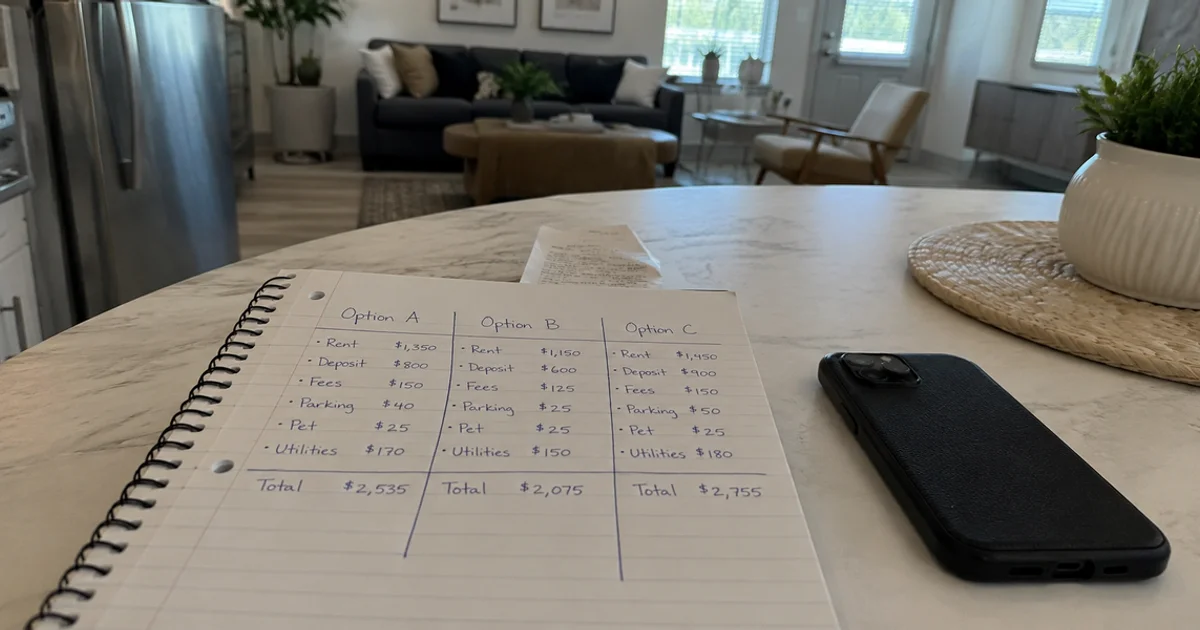
We know how frustrating a lease denial feels, especially for business owners relocating or homeowners in transition. The current US rental market makes approval harder than ever. A 2026 Harvard Joint Center for Housing Studies report pegs median renter move-in costs at $3,700, highlighting this massive financial barrier.
Our team created this guide to break down exactly how deposit alternatives, lease guarantees, and larger deposits solve different problems.
Getting that distinction right first is what makes the rest of this comparison useful. This fundamental understanding is the starting point for any bad credit apartment search involving a deposit alternative vs guarantor bad credit apartment decision.
First, work out which problem you have
We always start by identifying whether you face a qualification problem or a cash problem. The three tools are not interchangeable, and picking the wrong deposit alternative vs guarantor bad credit apartment solution wastes money.
- Qualification problems: If the property declined the application, a qualification issue exists. Only a lease guarantee, a co-applicant, or a different property fixes a decline. Bringing more cash to a management company that already said no does absolutely nothing.
- Cash problems: If the property approved you with conditions, like a doubled deposit, a cash problem exists. We see deposit alternatives solving this specific conditional approval for less upfront money. A deposit alternative typically costs a fraction of the condition it replaces. Understanding your exact denial reason saves time and capital.
The three tools
Our breakdown below explains the specific mechanics of each option.
- Deposit alternative: Deposit alternatives replace a large cash security deposit with a smaller non-refundable premium. Providers like Jetty, LeaseLock, Obligo, and Qira address cash shortages at signing. Jetty merged with Rhino in 2025, making a jetty vs double deposit comparison critical for lowering upfront costs.
- Lease guarantee: Companies like TheGuarantors, OneApp Guarantee, Liberty Rent, and CoSign address qualification hurdles. A third party backs the rent, letting a property approve a file that failed screening. TheGuarantors typically charges a one-time premium between 5% and 10% of the annual rent.
- Larger cash deposit: This means the property holds more of your money against the risk. This fully refundable option addresses cash-versus-risk objections, but only where the property has already decided to approve the applicant.
Compared on a $1,438 unit
We built this comparison to reveal the true cost of each option on a standard $1,438 monthly lease. Two of these three tools do nothing about an outright decline. The row labeled “Changes approval” decides the outcome in most situations.
| Deposit alternative | Lease guarantee | Doubled cash deposit | |
|---|---|---|---|
| Cost at signing | ≈ $150 - $430 | ≈ $1,438 | ≈ $2,876 |
| Refundable | No | No | Yes, less deductions |
| Changes approval | No | Yes | No |
| Opens Class A inventory | No | Yes | No |
| Accepted where | Property-specific | Management-company policy | Everywhere |
| Best when | Approved with a deposit condition | Declined on credit or income | You have the cash and prefer it back |
Our clients often underestimate the opportunity cost of tying up large sums of cash. A $2,876 doubled deposit represents money you cannot use or invest for twelve months. Move-out deductions are routine in the US rental market, meaning you rarely get the full amount back.
Refundable is doing less work than it sounds
We consider a $300 non-refundable premium you never had to find a different kind of expensive. This smaller fee ends up being the cheaper practical choice for most renters. Keeping thousands of dollars liquid provides better financial flexibility.
The monthly risk fee trap
We warn applicants that some properties offer a monthly risk fee instead of a larger deposit. This option looks attractive simply because the monthly number appears small. At $50 a month, that charge totals $600 over a year and $1,200 over two years.
Our team points out that this fee is not refundable and does not reduce over time. Against a $400 one-time deposit alternative premium, a $50 monthly fee costs three times more by the end of a typical lease. For example, the typical leaselock cost apartment fee runs between $12 and $25 monthly, which requires careful long-term calculation.
We advise everyone to perform two quick calculations before making a comparison.
- Convert any monthly charge into an annual figure to see the real cost.
- Ask the leasing office whether the fee continues at renewal because a yes answer immediately doubles the total figure.
Using two together
We regularly see applicants use both a guarantee and a deposit alternative successfully. This strategy does not mean paying twice for the exact same coverage. A renter declined on credit uses a guarantee to get approved by the property manager.
Our landlord partners, having approved conditionally, often still want a doubled deposit. The renter then uses a deposit alternative to avoid tying up $2,876 in cash. Two tools resolve two different objections simultaneously.
We recommend asking the property directly if they permit this specific combination. Some management companies insist on cash deposits where a guarantee is already in play. New York’s 2025 Assembly Bill A1431 pushed for clearer tenant choices regarding deposit insurance, though policies still vary wildly by state.
What to confirm before committing
We created a mandatory checklist for you to review before signing anything. Skipping these questions leads to surprise fees down the road. Clarifying these terms protects your cash flow.
- Our top question to ask is which specific programs the property accepts, and when that policy was last updated.
- Does the deposit alternative here replace the deposit entirely, or only part of it?
- If a guarantee is used, is the deposit reduced or waived?
- We also strongly suggest asking if any premium repeats at renewal.
- What is the total cash at signing, all in?
- Your final task is checking the fine print for hidden application fees.
Our guide on What a guarantor program costs covers the premium structure and the renewal question in more depth. You can run your own custom figures using our renter tools before speaking to a leasing office. Whichever route you take, the property management makes the final decision.
We know these tools improve the odds and change the upfront price significantly. They do not produce approvals on their own. Finding the cheapest way to get approved bad credit apartment requires matching the exact tool to your specific denial reason.
Our experts suggest reviewing your budget today to see which upfront cost makes the most sense. Check your credit score and ask your prospective landlord for their official policy. Start comparing rates now to secure the best deposit alternative vs guarantor bad credit apartment setup for your next lease.