
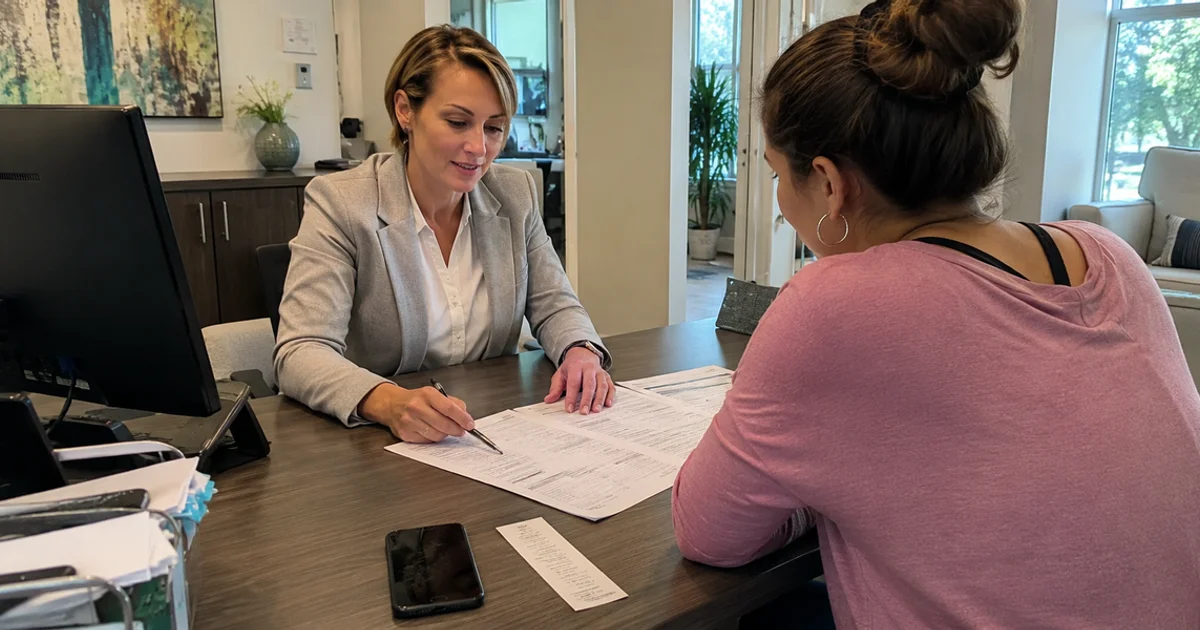
We know how opaque the rental approval process feels. Many renters view application approval as a single massive hurdle. We prefer to look at it for what it truly is: six separate, independent gates.
Getting these apartment screening criteria explained clearly makes the difference between fixing a problem and guessing.
Our standard approach uses this exact framework across the rest of our guides, and it is the same one our free second chance apartment locating service runs against every Fort Worth community before you apply. If the situation involves an eviction filing, start directly with apartments that accept evictions.
We frequently see applicants face a financial gap rather than a historical one. In those instances, guarantor programs usually provide the most relevant route.
Apartment screening criteria explained: The six dimensions every application is scored on
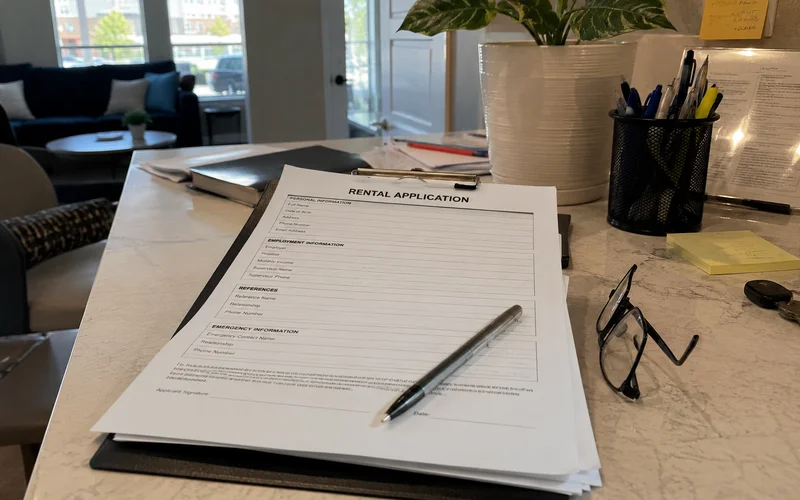
Our standard assessment breaks every application down into six specific categories. Failing a single category triggers a denial, so understanding these metrics is critical. We want you to see exactly what properties evaluate behind the scenes. For anyone asking what do apartments check on application, here are the six primary dimensions.
1. Eviction lookback. Properties decide how far back they check court filings and whether they read the final disposition or just the existence of a case. Tarrant County operates eight Justice of the Peace (JP) precincts for these filings. Lookback windows in this region generally run from one year up to seven years.
2. Rental debt policy. We see this specific gate cause more denials than most applicants expect. Properties establish whether they require a zero balance, accept a documented payment plan, or consider an open balance.
3. Income multiple. The standard ratio requires gross monthly income to equal three times the rent. Some 2x and 2.5x communities still exist across Tarrant County. We are also seeing a massive shift in how this income is verified in 2026. Fraud detection platforms like Snappt are now industry standard. The 2026 Snappt Multifamily Fraud Report found a 5.1% average fraud rate across over 1.4 million applications, leading properties to strictly mandate automated document verification to catch fake paystubs.
4. Credit threshold. We constantly monitor these hard score floors for approval. Properties frequently use a proprietary rental screening score rather than a traditional lending FICO score. Recent federal regulations, including a major 2024 settlement involving SafeRent and subsequent 2026 state laws on AI deployers, are forcing landlords to be more transparent about how medical debt and collections affect these automated scores.
5. Background policy. Properties apply rules regarding offense categories and years since disposition. This happens either by automated rule or through an individualized assessment.
6. Third-party programs. We always check which lease guarantee and deposit alternative providers a community accepts. This functions as a criteria dimension in its own right because it changes what the other five categories can tolerate.
The whole framework in one sentence
You are not approved or denied, you clear or fail six separate tests, and a single failure is usually fixable once you know which one it was.
Who sets them, and why the leasing agent cannot help
Three different concepts get labeled as “criteria” and they all behave differently in practice. Our team frequently sees applicants waste time arguing with front-desk staff who have zero power to override these systems. Understanding the hierarchy saves time and frustration. We classify these decision makers into three distinct layers.
Automated Platform Criteria
These rules live inside major screening platforms such as RealPage or Yardi. Data goes into the software, a recommendation comes out, and the on-site team simply applies it. We rarely see a human weighing a complex explanation here because the standardized workflow completely removes subjective judgment.
Management-Company Policy
This layer sits above the software platform. Massive institutional players like Greystar, Willow Bridge, RPM Living, and Asset Living set portfolio-wide rules. Our analysts track how they dictate lookback windows, balance postures, and program acceptance across thousands of units. This overarching structure is why the acceptance of a specific guarantee program usually remains consistent across an entire corporate portfolio.
On-Site Discretion
This final category represents what remains, and it varies enormously by location. Older locally managed stock across east Fort Worth, Meadowbrook, Woodhaven, Poly, Como, and the south side often gives local managers real latitude when setting rental screening criteria Fort Worth renters face. We note that institutional Class A properties in North Fort Worth and the Alliance corridor generally prohibit any local overrides.
None of this implies that Class A properties are universally harder to secure. Those same corporate-criteria properties frequently partner with guarantee programs. That mechanism successfully approves records that an older, locally managed property might immediately decline. The route simply differs. Context and personal explanation work where a human reads the file, while documented financial tools work where a strict algorithm decides.
Why criteria move, and why a date matters
The Dallas-Fort Worth metroplex is actively absorbing a heavy delivery cycle of new apartment units. Market dynamics shift rapidly, directly impacting the baseline apartment approval requirements Texas properties enforce. We closely monitor these fluctuations to guide strategic leasing decisions.
According to July 2026 data from Yardi Matrix, occupancy across stabilized Dallas-Fort Worth properties sits at 92.3%. The region is currently working through excess supply, with year-over-year rents falling by 1.6%. Our market research highlights massive new deliveries arriving, including the $1.7 billion Westside Village adding 1,785 units in phases starting this year.
The Lease-Up Incentive
A property filling its first residents faces intense pressure to hit occupancy targets. These brand-new buildings possess a strong financial incentive to approve people. We regularly advise clients that screening criteria sit at the softer end of the operator’s range during this initial phase. Rent concessions also run heavily in favor of the applicant right now. Once the building reaches stabilized occupancy, management reverts to stricter baseline policies.
The Importance of Verification Dates
This constant shifting explains why every criteria answer we provide carries the exact date it was confirmed. Our staff re-verifies these details quarterly to ensure accuracy. An undated claim about a lease-up building is worse than no claim at all, because it sounds specific but might be entirely obsolete. We urge everyone to ask the leasing office when a policy was last updated. It is a fair, professional question, and the answer is highly informative either way.
How the six dimensions interact
These six screening dimensions are not independent in practice. The most useful strategic planning happens where these categories intersect and influence one another. We built the following matrix to illustrate common offsets.
| If you fail | It is often offset by | Where that works |
|---|---|---|
| Credit threshold | Strong documented income, or a guarantee | Most property types |
| Income multiple | A 2x/2.5x community, co-applicant, or guarantee | Widely available in Tarrant County |
| Rental debt policy | A settlement letter, or a documented plan | Payment-plan-accepted properties |
| Eviction lookback | A property with a shorter window, or a guarantee | Varies sharply by operator |
| Background policy | Individualized assessment with documentation | Properties that run that review |
A strong income picture easily offsets a weak credit score at some properties, while providing zero benefit at others. An old eviction filing paired with an open balance frequently screens worse than a newer filing with a zero balance. We see this happen because two separate dimensions fail at once, triggering an automatic rejection. This interconnected reality is exactly why applicants must sort options per property rather than relying on general categories.
Preparing Your Documentation
The most useful next step involves seeing exactly what the property managers will see. Our guide to pulling your own tenant screening report walks through requesting your specific files. You will need to check your Experian RentBureau, CoreLogic SafeRent, and TransUnion files, alongside a direct Tarrant County JP court records search. We recommend reviewing these files at least 30 days before applying anywhere. If you find an error, you have a brief window to dispute it before a leasing agent sees the red flag.
Finalizing the Search Strategy
Once you know your six numbers, the property search stops being a frustrating guessing game. Criteria research never guarantees an approval, as the individual community always holds the final decision. We consider applying only where you already clear the established tests to be a materially different exercise from applying and hoping. With the criteria in front of you and your own screening file in hand, you can run a targeted search instead of a hopeful one.