

Stop paying to find out what you could have looked up
Every rental application costs you between $50 and $100. Renters routinely spend three or four times that amount discovering what sits in their file. A single denial often reveals that part of the report is completely wrong.
We see this happen to homeowners between houses and business owners securing temporary corporate leases all the time. That is why checking your data before applying is the single highest-return hour in the whole process.
This proactive approach serves as the starting point for second chance apartment locating done properly. Taking control of your data offers immediate benefits:
- Prevents automatic rejections for unknown errors
- Saves hundreds of dollars in wasted application fees
- Gives you time to prepare explanation letters
Pulling the same screening report a Texas property manager pulls is your first defense. Everything a Fort Worth property manager will see about your rental history, debt, and court records is available to you. Most of these checks are free and return results within a few days.

The four sources, and what each one holds
Knowing where property managers get their data gives you a massive advantage. Our team pulls these specific reports daily to verify applicant details. You should pull your files directly from these four main databases before submitting any rental application.
Experian RentBureau. Participating property managers use this database to report your monthly rental payment history and any outstanding rental debt. We often see a broken lease with an unpaid balance appear right here. Submitting an experian rentbureau report request directly to Experian includes this crucial data. Experian recently noted that positive rental data can even boost standard credit scores, making this a dual-purpose check.
CoreLogic SafeRent (SafeRent Solutions). Many large management companies rely on this specific tenant screening bureau. This platform holds your rental history alongside court records and criminal history, depending on the exact product the landlord purchased. You must pull a corelogic saferent tenant report from SafeRent Solutions directly to see what they have on record. SafeRent generates a specific risk score that often dictates approval for luxury apartments.
TransUnion. This bureau provides both traditional credit data and specialized tenant screening data through its rental products like SmartMove. We find that the standard credit report is available free through the annual credit report process. You will need to request TransUnion’s rental screening file separately to see the full picture. A 2025 TransUnion study shows that ResidentScores predict eviction risk 15% better than standard credit scores.
Tarrant County Records Search. This free public database houses court records, including justice of the peace eviction cases. We use this to see exactly where a filing lives within the local legal system. Running a tarrant county records search eviction check reveals exactly where a filing lives within the local legal system. Keep in mind that evictions are filed in the precinct where the property sits, and Tarrant County has eight different precincts.
Request all four, not one
They hold different data and they disagree more often than you would expect. A property using SafeRent sees something different from one using RentBureau, and the court record shows things neither bureau has picked up.
What each source misses
Every screening tool has major blind spots that can ruin your chances. We know exactly where these gaps exist in standard reports.
Court records do not show balances. A dismissed case looks perfectly clean on the public docket. A $2,400 balance might sit with a collection agency completely invisible in a standard records search.
Debt reporting does not show court outcomes. A credit bureau may record that a case exists without showing it was later dismissed or settled by agreement. We constantly see this missing context cause automatic denials. The harmful label arrives without the full legal context.
Neither shows what your prior landlord will say. Property managers almost always conduct rental verification through a direct phone call. A former landlord’s answer about whether you left owing anything is not in any file you can pull. Assume the difficult questions get asked and answered if you left on bad terms.
This harsh reality is exactly why early disclosure beats concealment every single time. A balance you disclosed upfront with a settlement letter attached is a manageable fact. The exact same balance discovered during a verification call becomes a massive credibility problem.
Reading the report, and spotting an error
Reviewing your documents carefully prevents unfair rejections. Our staff frequently spots costly mistakes in these automated files. Check these specific areas immediately:
- Names and addresses that are not yours. Mixed files happen frequently, especially with common last names.
- Duplicate accounts. The same past-due balance reported by both the landlord and a collection agency reads as two separate debts.
- Wrong disposition. A court case might show up as a judgment when it was actually dismissed or agreed upon.
- Wrong dates. A filing dated later than it happened can push you inside a lookback window you should have cleared.
- Balances already paid. This is extremely common and provides the perfect reason to keep every single paid-in-full letter.
You possess a federal right to dispute incorrect information with the consumer reporting agency under the Fair Credit Reporting Act. We tell clients that these formal disputes generally take about 30 days to process. A 2024 Consumer Financial Protection Bureau report found that incorrect information remains the most common credit complaint nationwide.
Send all your documentation via certified mail and keep physical copies of everything. A successful correction takes another full reporting cycle to reach the databases that properties pull. Carry the physical correction letter with you to property tours in the meantime.
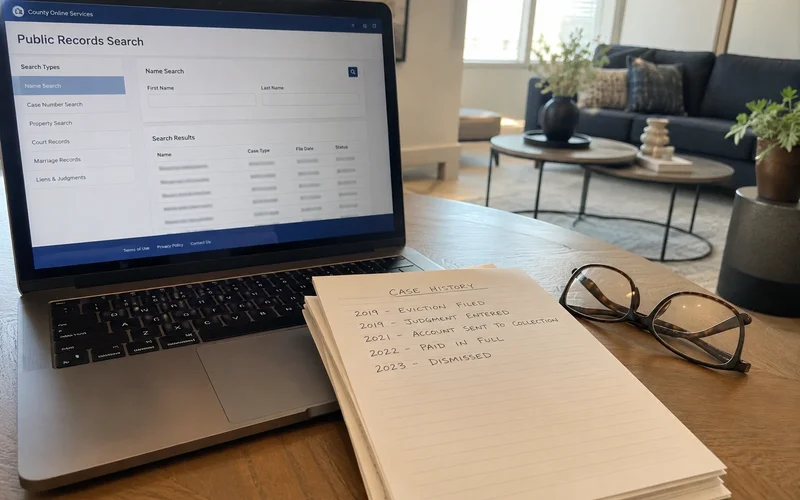
Why a dismissed Texas eviction still appears
The court filing itself serves as the permanent public record. We handle questions about this specific issue from frustrated applicants every single week. Texas eviction filings become public from the day they are filed, regardless of the final outcome.
These records simply do not expire under current state property codes. A judge’s dismissal changes the final disposition, but it absolutely does not delete the case from the county system. Therefore, your primary goal is not removal but thorough documentation.
You must pull the actual case file and gather these key details:
- The exact cause number
- The original filing date
- The official final disposition
Keep this physical disposition record ready to attach to any future rental application. A short factual letter turns a bare docket line into a human account a property manager can actually understand. Our comprehensive guide on how long an eviction stays on your record in Texas covers the permanence question in full detail.
Questions regarding sealing, expunction, or nondisclosure are strictly legal matters. We are licensed real estate agents rather than practicing attorneys. Contact Legal Aid of NorthWest Texas or a qualified local attorney for legal counsel on those specific actions.
What to do with the report once you have it
You must match your fresh data against the strict approval requirements of your target property. Our process compares applicant files against six critical screening dimensions.
These specific criteria dictate every single approval decision:
- Eviction lookback periods
- Rental debt policies
- Income multiples (typically 3x the monthly rent)
- Credit score thresholds
- Background and criminal policies
- Third-party guarantor programs
Screening criteria explained sets out exactly what each of these dimensions measures. You now know clearly which strict gates you clear and which ones you fail. This knowledge converts an open-ended apartment search into a highly filtered, targeted one.
A random application transforms from an expensive gamble into a very reasonable bet. If an unexpected denial has already happened, what to do next after a denial covers how to use the adverse action notice to aim your next try.
None of this preparation guarantees an automatic approval. It does mean your next application is informed rather than blindly hopeful. Saving $50 to $100 per failed try makes this investigative work worth an afternoon of your time, so start pulling your records today.