
One fact splits the market in half
We frequently notice a frustrating reality in the housing market where two renters with identical broken leases face completely different searches. A recent 2026 TransUnion report indicates the average approved Resident Score sits around 680, making any negative mark a massive hurdle. A score in that range tends to be the dividing line between a standard approval and an instant denial.
The critical variable is not the reason for the break or how long ago it happened, but whether money is still owed. We always tell clients that this single financial fact dictates which properties will consider an application and what documentation is required.
Sorting yourself correctly is the vital first step in any broken lease apartment search. Our guide will break down the three main postures properties take and walk through the exact paperwork needed to secure an approval.
The three postures
Zero balance required is a strict policy gate. We encounter this barrier at most large properties using automated screening software like RealPage or Yardi. Nothing can be owed to any prior landlord, and the management wants it clearly evidenced. A lease guarantee will rarely override this rigid software rule.
Payment plan accepted is a more flexible posture. We often find this option at locally managed properties where a human actually reviews the applicant file. An active, documented plan in good standing satisfies their baseline requirements. Our clients usually secure approval here by providing the written agreement plus two or three recent payment confirmations.
Open balance considered is the most subjective category. We see property managers weigh the open balance against income, recent rental history, and the age of the debt. A typical lease break costs the equivalent of two to four months of rent, representing a significant liability. Our advice is to use a guarantee here, because it directly offsets the high financial risk that a large balance creates.
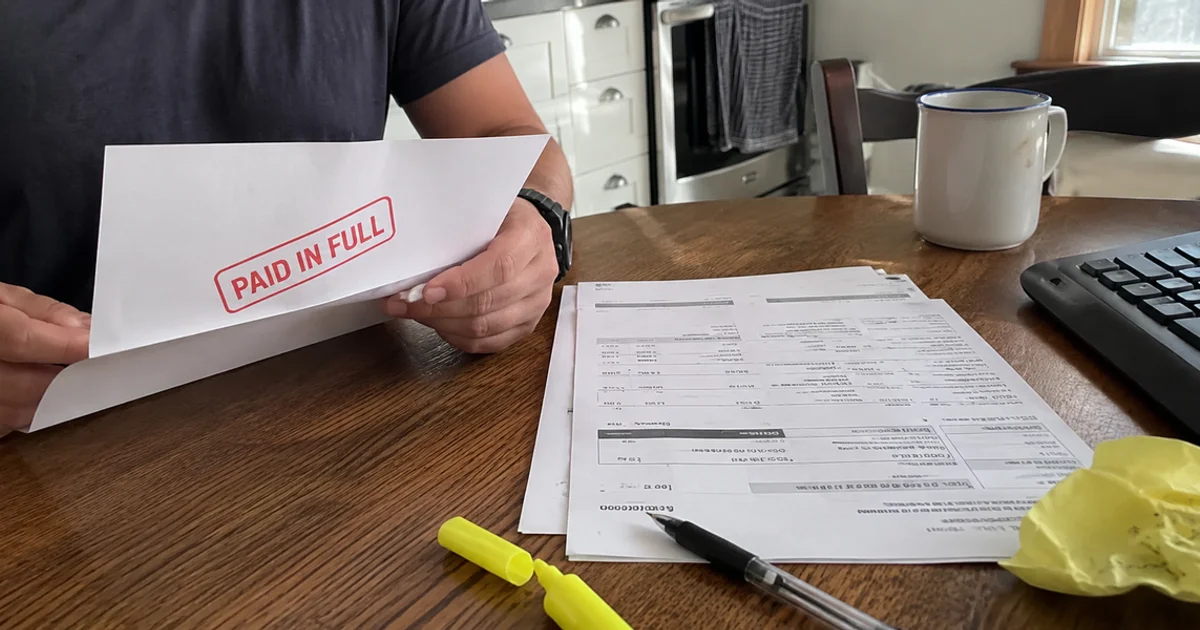
A paid-in-full or settled letter on the landlord’s letterhead is the most critical document a renter can hold.
We rely on this letter to convert the largest tier of the market from closed to open.
Tenant screening files often lag behind reality by a reporting cycle or more, making physical proof essential.
What each posture wants from you
We want you to notice what is completely absent from all three postures: an explanation of why the lease was broken. The reason only matters at properties with human discretion, and even then, it carries much less weight than the actual money. The reason is a story; the balance is a number. Screening software strictly prefers numbers.
| Posture | Evidence required | Where a guarantee helps |
|---|---|---|
| Zero balance required | Paid or settled letter, on letterhead | Rarely, as it is a policy gate |
| Payment plan accepted | Written plan plus payment confirmations | Sometimes, alongside the plan |
| Open balance considered | Explanation, amount, age, current income proof | Often, because it offsets the risk directly |
We remind applicants that major screening bureaus like NBOA keep broken lease records visible for five to ten years. Gathering every piece of financial proof early is the best way to counter this long reporting window, which is crucial.
Amount and age shift where you land
We categorize these debts into specific tiers because a balance is not one universal thing.
- Small and old balances, like a few hundred dollars from four years ago, are frequently treated as background noise. We still strategize to clear these cheap debts to remove any lingering questions during the application process.
- Large and recent debts, such as several thousand dollars from last year, represent the hardest version to overcome. We see these heavy files fail zero-balance properties outright. This heavy debt drops credit scores well below the 580 floor required by most mid-tier apartments. Our clients find that a guarantee earns its premium here, and settling the debt changes the search more than any other action.
- Anything in between depends heavily on the rest of the application file. We recommend showcasing strong, documented income and a clean rental history since the break. These positive factors carry real weight at properties that allow manual review.
Why a screenshot is not enough
We watch renters pay a balance, screenshot the confirmation, and falsely assume that closes the issue. Leasing offices routinely refuse that visual proof. Leasing offices reasonably point out that a payment screen shows money moving, not an account being satisfied. The required proof is a formal letter from the landlord or collection agency that includes specific details.
- Our advice is to ensure it is printed on official letterhead.
- The document must explicitly identify the account as settled in full.
- We urge clients to agree on the exact wording before any money changes hands, because leverage disappears the moment the payment clears.
This documentation matters immensely due to severe lags in national screening files. A settled account can take 30 days to process at bureaus like Experian, plus another full reporting cycle to appear in a property background check. During that 60-day gap, the physical letter is the only proof that exists. Our detailed breakdown on whether to settle, pay down, or apply anyway works through the timing decision when a move-in date is pressing.
Where a guarantee fits
A lease guarantee strictly covers future rent at the new property. We remind applicants that it does not pay the old landlord or make the past balance disappear. What a guarantee actually does is change how an open-balance-considered property calculates financial risk. We frequently see this tool move a borderline file from a decline to an approval. It will not open a zero-balance-required property, because those managers follow a rigid rule rather than a risk calculation.
Our team points out that Texas Property Code Section 91.006 (2025) requires landlords to mitigate damages by attempting to re-rent the unit.
This legal protection can sometimes reduce the final balance you actually owe.
The property management always makes the final call. The broader treatment of rental debt across all situations is covered in this guide to apartments with money owed. We encourage you to pull your latest screening report today and start organizing your documentation. Knowing your specific debt posture simply ensures you are asking the right questions to the right communities.