

Renters hit this fork constantly, usually mid-move. You might find yourself wondering, should I pay off broken lease before applying apartment? This specific roadblock is the practical fork behind most broken lease apartment searches.
We know this process catches smart professionals completely off guard.
A decision that should take an afternoon often traps people for weeks. The cost of getting it wrong is a lost unit or a wasted month of temporary housing.
Our goal is to examine the data behind these screening barriers and outline your next steps. Let’s look at the actual numbers and walk through three practical ways to secure your next home.
Three options, and the deadline decides between them
You owe a former landlord. You need a place to live while waiting for your new house to close or your business transfer to complete. The question is whether to fix the debt first or apply now.
The honest answer depends almost entirely on how much time you have.
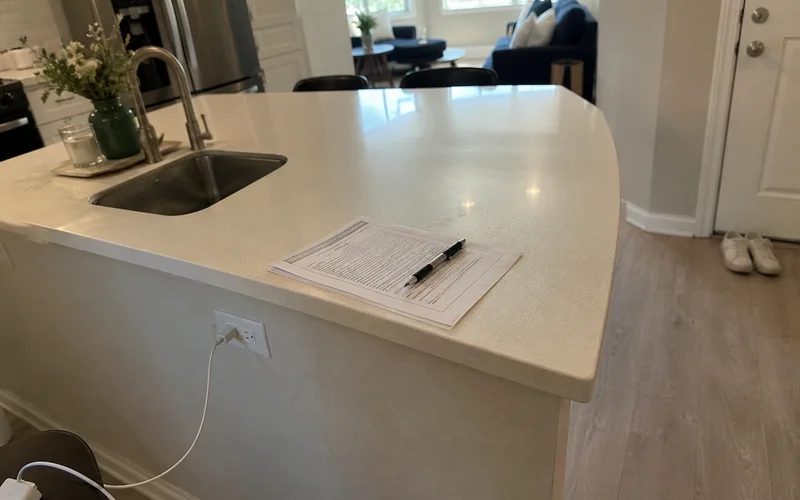
Option one: pay in full
Do this when you have the money and at least three or four weeks before you need to move.
Zero-balance-required properties represent the largest tier of the market. You must settle rental debt before applying to these premium units, as they are closed to you until the balance is resolved. Opening this inventory usually does more for your search than any other single action.
We always remind clients that screening files do not update instantly. The clearing process involves several mandatory steps:
- Submitting your dispute or payment to the collection agency.
- Waiting up to 30 days for the credit update to process.
- Allowing another reporting cycle to pass before the cleared debt appears.
During that gap, the paid-in-full letter in your hand is the definitive proof. You should secure the official letter before you receive the payment confirmation email.
We highly recommend requesting a “pay for delete” agreement if the debt went to collections. Landlords increasingly use VantageScore models for apartment screening. A VantageScore ignores paid collections entirely, meaning your score might increase immediately upon payment.
Option two: negotiate a documented plan
Do this when you cannot clear it in one payment but can commit to regular ones.
Our clients often use this approach to negotiate broken lease balance agreements and open payment-plan-accepted properties. Securing a broken lease payment plan apartment is highly useful among locally managed housing stock where a real person reviews the file. It requires written plan terms and evidence of two or three payments made strictly on schedule.
A verbal agreement holds zero weight at a leasing desk.
We strongly advise securing two specific items at the exact same time to protect your interests:
- The exact terms of your monthly payment schedule.
- The final closing language stating the debt is satisfied.
Current research into 2026 debt collection practices shows that agencies typically settle outstanding rental balances for 40% to 60% of the original amount owed. You hold a distinct advantage if you act quickly and present a clear financial hardship letter.
Option three: apply now to open-balance-considered properties
Do this when the deadline is short, or when the balance is large enough that settling is not realistic in your timeframe.
Our strategy here relies on communities that weigh the balance against income, recent rental history, amount, and age. This tier is narrower than the other two options. Pairing your application with a third-party guarantee widens your options meaningfully.
A specialized guarantee offsets exactly the financial risk the open balance represents.
We suggest utilizing well-known corporate guarantors like The Guarantors or Leap to bypass automatic denials. These services typically charge a non-refundable premium ranging from 40% to 110% of one month’s rent. The exact cost depends directly on your current income and credit profile.
On a court deadline, do not pause the search
SB 38 sets trial 10 to 21 days after filing, four days to respond, five to appeal. Inside that window, settling a debt and waiting for it to surface is not a plan. Run the settlement in the background and search open-balance-considered inventory now.
Compared
We organized the critical differences below to help you make a faster choice.
| Feature | Pay in full | Documented plan | Apply now |
|---|---|---|---|
| Inventory opened | Largest tier | Middle tier | Narrowest tier |
| Cash needed now | Full balance | First payments | Premium fee (40% to 110%) |
| Time before it helps | Immediately with a letter | After 2 to 3 payments | Immediately |
| Works on a tight deadline | Only with the letter in hand | Rarely | Yes |
| Guarantee useful | Not needed | Sometimes | Often |
Get the terms in writing first
Whichever route you take, the sequence is the same and the order is strictly non-negotiable. You must agree on the terms and the closing letter wording in writing before you pay.
Our team sees renters lose their bargaining power the second a payment clears the bank. A collection agency that was willing to issue a “settled in full” letter before payment has absolutely no incentive to draft anything afterwards. Chasing that document takes weeks you will spend explaining your situation at leasing offices.
We instruct every client to ask specifically for a written letter containing:
- The identified account number.
- The exact settlement amount and payment date.
- Clear language stating the balance is permanently satisfied.
The federal Fair Debt Collection Practices Act (FDCPA) gives you exactly 30 days to request validation of the debt. You should use this right to confirm the agency actually owns the account before transferring any funds.
Our detailed guide on how to pay it off or negotiate a payment plan covers the negotiation itself. That resource explains exactly what a collection agency can and cannot do under current law.
Running both at once
This is the answer more often than people expect, and it costs nothing to attempt.
Our most successful business owner clients run a parallel strategy to maximize their chances. You should immediately begin executing two steps simultaneously:
- Start the settlement or payment plan negotiations.
- Build a shortlist from open-balance-considered communities.
We encourage you to apply to those flexible guarantee-accepting properties right away. If a good unit lands before the settlement processes, you take it. The old debt does not become harder to resolve simply because you secured a new address.
If your deadline is genuinely urgent, that pressure changes your whole sequence. The immediate move-in placement process starts with made-ready inventory and pre-screened criteria. Every single denial on a compressed timeline costs you valuable days and application fees.
Our standard caveat is not just boilerplate language. A settled balance drastically improves your position, but it does not guarantee approval because the property always makes the final decision.
Conclusion: Should I pay off broken lease before applying apartment?
Our final advice is to start by assessing exactly how many days you have until your required move-in date. Your timeline dictates your entire approach to a broken lease.
Gather your financial documents and pull your current credit report today.
We suggest contacting the collection agency in writing immediately if you choose to negotiate. Taking decisive action now puts you back in control of your housing search.